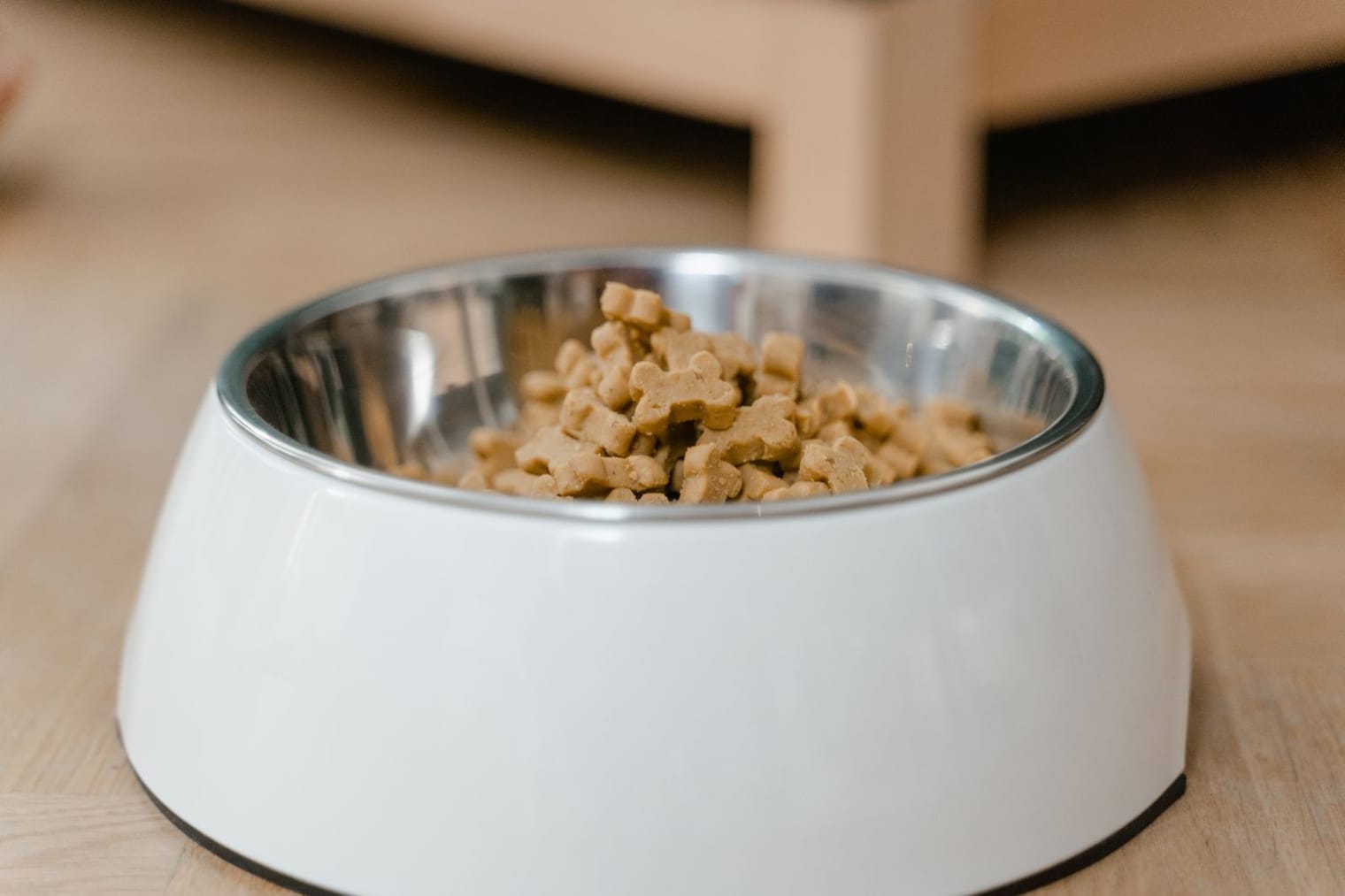
Puppies do best fed little and often: several small meals a day when they are young, easing down to two as they grow. Age is the main thing that decides how many. Here is the schedule by age, sample meal times that work in a real day, and how to change it as your puppy grows up.
The feeding schedule by age
Age is the main thing that decides how many meals a day. A typical schedule looks like this:
- 8 weeks to 4 months: 3 to 4 small meals a day. Tiny stomachs and fast growth mean frequent, small meals suit this stage best.
- 4 to 6 months: 3 meals a day. Growth is still quick, so keep meals regular.
- 6 to 12 months: 2 meals a day. Most puppies are ready to drop to two meals at around six months.
- 12 months and beyond: 2 meals a day for most dogs, morning and evening, into adulthood.
These are the meal counts Vivlo uses too. The number matters less than keeping the meals regular and splitting the daily amount evenly between them.
Sample daily meal times
Spread the meals through the day and put the last one a few hours before bed, so your puppy can toilet before settling for the night:
- Three meals: around 7am, midday and 5pm.
- Two meals: around 7am and 5pm.
The exact clock times matter less than keeping them the same each day. A puppy fed on a steady routine digests better, settles better, and becomes far easier to toilet-train.
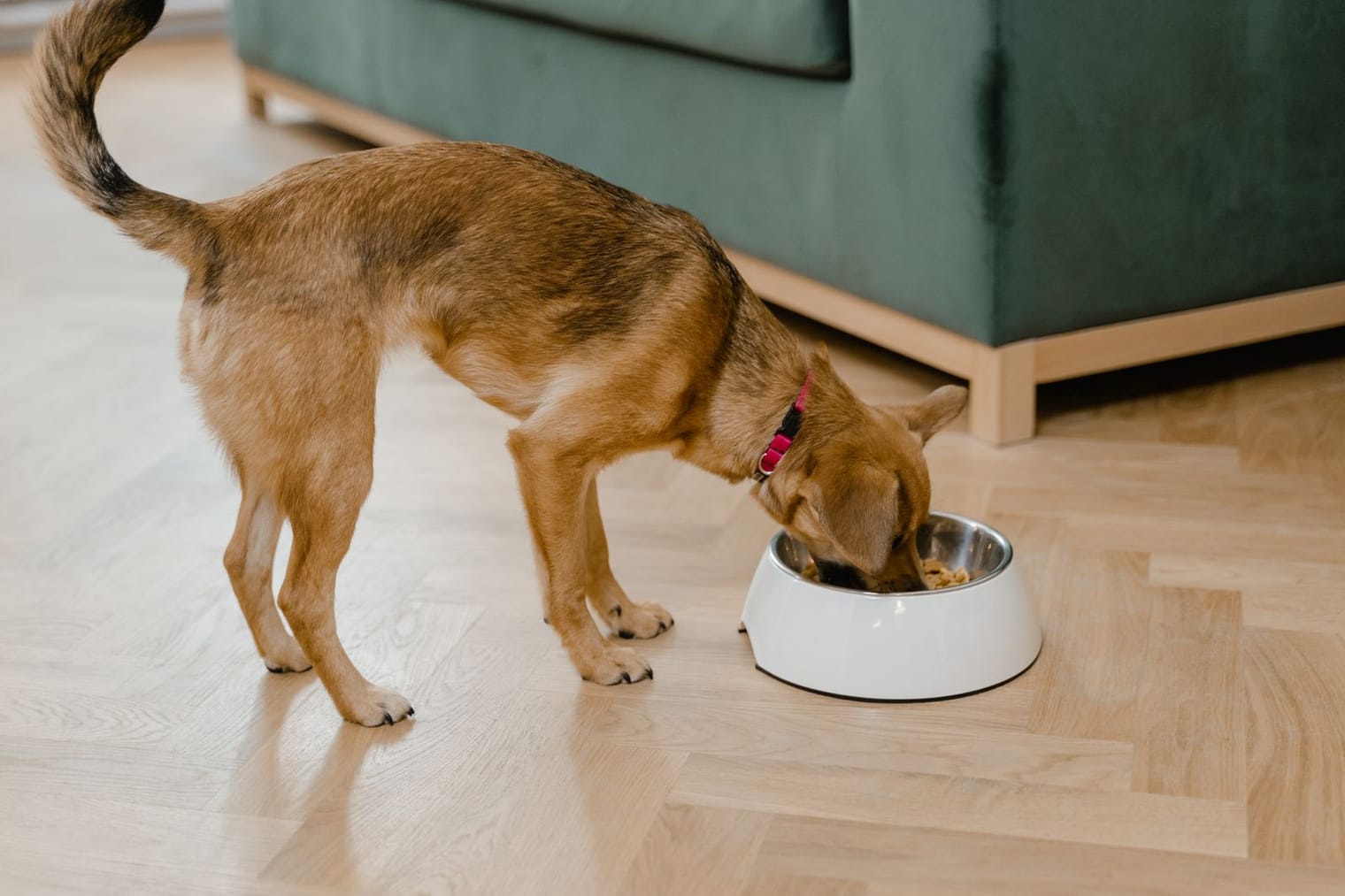
Why regular mealtimes matter
Set meals do more than fill a bowl:
- Toilet training. What goes in on a schedule comes out on a schedule, so regular meals make it far easier to predict when your puppy needs out.
- Spotting problems early. If your puppy suddenly leaves a meal, you notice at once. With food left down all day, an off day slips past unseen.
- No fussy grazing. Meals at set times, picked up after 15 to 20 minutes if untouched, keep most puppies keen and head off picky habits.
The one thing that should always be available is fresh water, not food.
How much to put in each meal
Work out the total daily amount first, then split it evenly across the meals. Feed to your puppy's current weight, start from the guide on the food packet, and adjust to body condition rather than a fixed table. Our guide to how much to feed a puppy walks through the order that gets it right, and the puppy feeding calculator works out the daily amount from your puppy's weight and age.
When to drop from three meals to two
Most puppies move from three meals to two at around six months, but there is no need to rush it. Good signs your puppy is ready are leaving food at one of the meals, growing well, and staying settled between meals. When you make the change, do it gradually over a few days, and add the food you take off one meal onto the other two so the daily total stays the same.
When to switch to adult food
Most dogs move onto adult food around the point they finish growing: roughly 12 months for small and medium breeds, and 12 to 24 months for large and giant breeds, which mature later. Switch gradually over about a week, mixing a little more of the new food in with the old each day to avoid an upset stomach. Our guide to when puppies stop growing covers the timeline by size.
Feeding and exercise: leave a gap
Try not to feed your puppy right before or straight after hard exercise. Leaving about an hour either side is sensible, because feeding around vigorous activity is linked to stomach upset and, in deep-chested breeds, to bloat, which is a serious emergency. Gentle pottering about is fine, this is only about hard running and play. Our guide to puppy exercise covers safe activity by age.
What is normal, and when to call the vet
A puppy skipping the odd meal, especially in hot weather or during teething, is usually nothing to worry about. It is worth a call to your vet if your puppy refuses food for more than a day, stops gaining weight while still growing, or shows sickness, diarrhoea or low energy alongside going off their food. A sudden change in appetite, up or down, is always worth a check.
Vivlo keeps the routine on track. Vivlo sets the right number of meals for your puppy's age, splits the daily amount across them, and can remind you at your own mealtimes, so the schedule stays steady even on busy days.
See how it worksCommon questions
How often should I feed my puppy?
Feed a young puppy little and often: three to four small meals a day from weaning to about four months, three meals from four to six months, then two meals a day from around six months into adulthood. Puppies have small stomachs and fast metabolisms, so spreading food across the day suits them better than one or two big meals.
What times should I feed my puppy?
Space the meals evenly through the day and put the last one a few hours before bed, so your puppy can toilet before settling. A three-meal day might be around 7am, midday and 5pm; a two-meal day around 7am and 5pm. Keeping the times consistent helps digestion and makes toilet training more predictable.
When can I reduce my puppy to two meals a day?
Most puppies drop from three meals to two at around six months, and there is no need to rush it. If your puppy is leaving food, growing well and settled, moving to two meals a day is usually fine from about six months. Make the change gradually over a few days.
Should I leave food down all day for my puppy?
For puppies, scheduled meals are better than free feeding. Set meals help toilet training, because what goes in on a schedule comes out on a schedule, let you spot straight away if your puppy goes off their food, and avoid fussy grazing. Fresh water, on the other hand, should always be available.
When should I switch my puppy to adult food?
Most dogs move to adult food around the point they finish growing: roughly 12 months for small and medium breeds, and 12 to 24 months for large and giant breeds, which mature later. Switch gradually over about a week, mixing increasing amounts of the new food in with the old.
Should I feed my puppy before or after a walk?
Leave a gap around walks and hard play rather than feeding right before or straight after. About an hour either side is sensible, since feeding around vigorous exercise is linked to stomach upset and, in deep-chested breeds, bloat. Gentle pottering about is fine.
How long can a puppy go between meals?
Overnight is the one long gap that is fine: a healthy puppy can go through the night without a meal once they are a few weeks past weaning. During the day, keep meals spread out rather than leaving long gaps, since young puppies do best fed little and often.